 Minnesota Voter Roll Dispute Sparks National Debate Over Election Integrity and Transparency
In the United States , few issues ignite sharper political debate than election integrity. That reality has once again come into focus in Minnesota, where a dispute over access to voter registration data has escalated into a broader argument about transparency, voter ID laws, and public trust in elections.
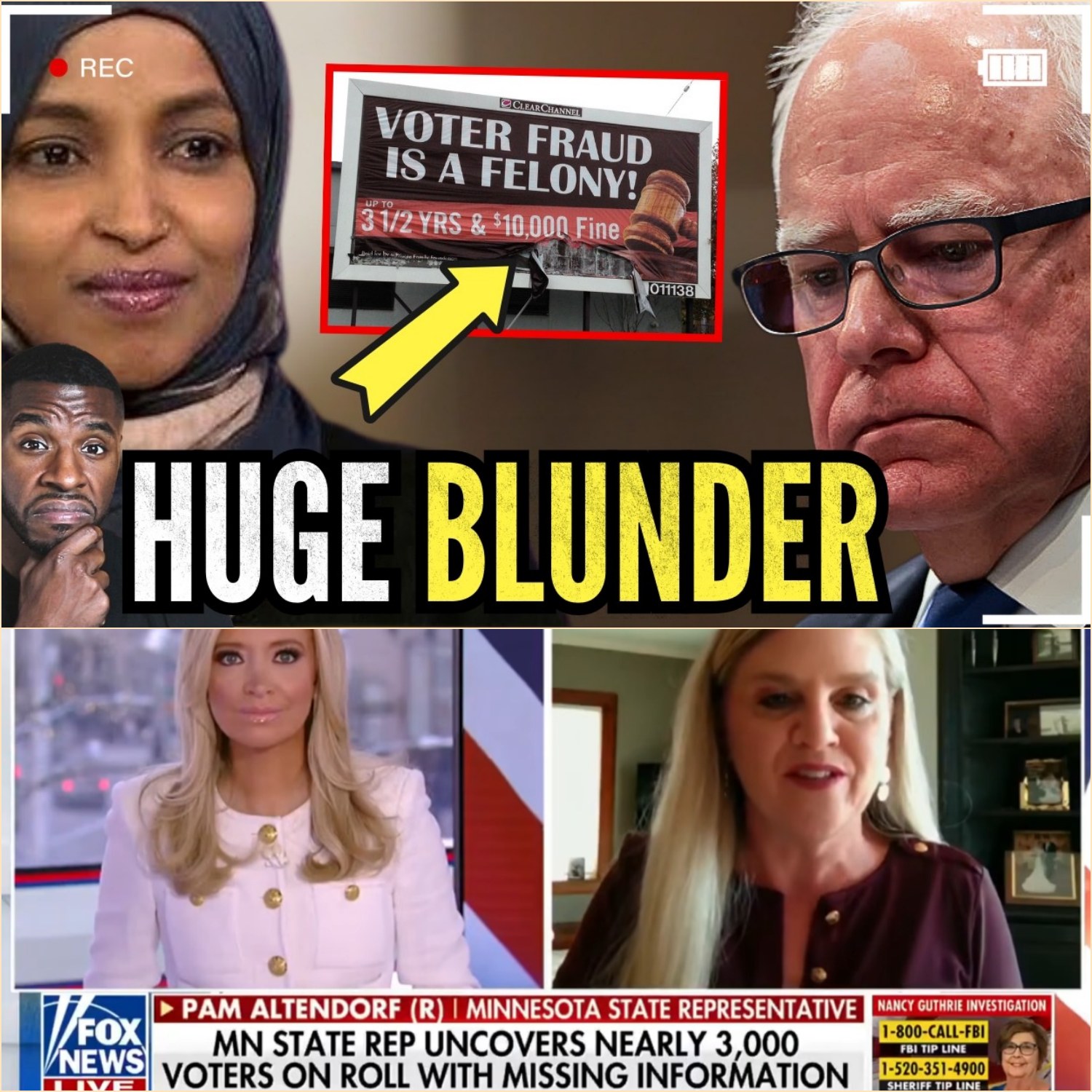
At the center of the controversy is Republican State Representative Pam Altendorf, who says she uncovered irregularities in Hennepin County’s voter rolls after requesting access to the data. Minnesota Secretary of State Steve Simon, a Democrat, disputes the framing of the situation and maintains that Minnesota’s election systems are secure and functioning as designed.
The disagreement has become part of a larger national conversation about voter fraud, access to election data, and whether additional safeguards—such as stricter voter ID laws—are necessary.
The Initial Claims: Questions About Voter Roll Accuracy
Representative Altendorf, who serves as vice chair of the Minnesota House Elections Committee, requested voter roll data from several counties, citing what she described as a statutory right to review election records.
According to Altendorf, Hennepin County—Minnesota’s most populous county—complied with her request, while others did not. She claims that her preliminary review of the data revealed nearly 3,000 entries with incomplete or questionable information, including missing birth dates or addresses, as well as possible duplicate registrations.
Hennepin County includes parts of Minneapolis and is represented in Congress by Ilhan Omar. Although Omar has not been directly implicated in the voter roll dispute, the county’s political profile has drawn attention from national commentators.
Altendorf argues that transparency should be nonpartisan and that reviewing voter data is part of ensuring fair elections. “If the rolls are clean, that’s good news,” she has said publicly. “But if there are discrepancies, we need to understand why.”
Secretary of State Pushback
Secretary of State Steve Simon has pushed back against suggestions that Minnesota’s election system is compromised. His office maintains that voter roll maintenance is governed by both federal and state law and that appropriate processes already exist for identifying and removing ineligible registrations.
Minnesota uses multiple verification mechanisms, including cross-referencing Social Security data and participation in interstate data-sharing systems to identify potential duplicates or deceased voters.
Simon has also emphasized that discrepancies in voter registration databases do not automatically equate to fraudulent voting. A voter record with incomplete information may be inactive, flagged for follow-up, or otherwise prevented from being used to cast a ballot without additional verification.
His broader argument echoes a common position among election officials nationwide: administrative irregularities are not the same as confirmed voter fraud.
The 500-Application Fraud Case
The current debate has also been fueled by a separate federal case involving fraudulent voter registration applications.
In 2024, two individuals pleaded guilty in federal court to submitting false voter registration applications across multiple Minnesota counties. According to prosecutors, between 500 and 600 fraudulent applications were filed in 13 counties.
The case came to light when election officials in Carver County noticed that names and addresses on certain registration forms did not match local residents. A subsequent investigation by the FBI and state authorities determined that the individuals involved had been paid to conduct voter registration outreach.
Importantly, officials—including Secretary Simon—have stressed that the case involved fraudulent registration forms, not fraudulent votes. There is no evidence that ballots were cast under those registrations. Simon described the case as “the system working,” pointing out that local election staff flagged the suspicious forms before any ballots were issued.
Still, critics argue that the existence of such a scheme highlights vulnerabilities in the registration process and justifies additional safeguards.
Voter ID and the National Conversation
The Minnesota dispute arrives amid ongoing national debates over voter ID requirements.
Under federal law, first-time voters who register by mail must provide identification or a Social Security number. However, whether voters must present photo identification at the polls varies by state. Minnesota does not require standard photo ID for most in-person voters, though it does use signature verification and other identity confirmation measures.
Advocates for stricter voter ID laws argue that requiring government-issued photo identification for all voters would reduce the risk of impersonation and bolster public confidence. Opponents contend that voter impersonation is extremely rare and that strict ID laws can disproportionately affect elderly, low-income, and minority voters.
Minnesota Democrats have generally opposed expanding voter ID requirements, while Republicans have advocated for reforms. The issue has appeared on Minnesota ballots before, including a 2012 constitutional amendment proposing voter ID requirements, which voters ultimately rejected.
The Role of Data Transparency
A key point of contention in the current dispute is whether state officials should grant broader access to voter roll data for independent review.
Election officials often balance transparency with privacy concerns. Voter databases contain sensitive personal information, including birth dates and addresses. Unauthorized release of such data can raise legal and security concerns.
Altendorf contends that as a legislator serving on the Elections Committee, she has both the authority and responsibility to review the data. Supporters of her position argue that legislative oversight is a legitimate part of democratic governance.
Secretary Simon’s office, meanwhile, maintains that Minnesota law governs who can access specific types of voter data and under what conditions. The disagreement appears to hinge not only on transparency but also on interpretations of statutory authority.
Election Margins and Political Stakes
The stakes are heightened by Minnesota’s history of close elections. In 2008, the U.S. Senate race between Republican Norm Coleman and Democrat Al Franken was decided by just 312 votes after a lengthy recount. That razor-thin margin remains a touchstone in Minnesota political discourse.
When elections are decided by small margins, even minor administrative irregularities can become politically significant. Critics argue that ensuring accurate voter rolls is especially important in such an environment.
At the same time, election experts caution that voter registration errors do not necessarily translate into fraudulent ballots. The process of casting a vote typically involves multiple layers of verification.
Immigration Policy and Public Perception
Some critics of Minnesota’s current policies have linked the voter roll controversy to broader immigration debates.
Minnesota recently expanded access to driver’s licenses for undocumented immigrants and has debated public benefits eligibility. Supporters describe these measures as pragmatic and humane. Critics argue they blur distinctions between citizens and non-citizens and could increase confusion about eligibility for voting.
It is important to note that non-citizen voting in federal elections is illegal under U.S. law. Election officials assert that citizenship verification processes are in place and that there is no evidence of widespread non-citizen voting in Minnesota.
Nonetheless, perception plays a powerful role in public trust. When administrative controversies coincide with broader policy debates, skepticism can intensify.
Trust, Verification, and Democratic Legitimacy
Public confidence in elections is foundational to American democracy . Surveys show that perceptions of election integrity often align with partisan affiliation. Republicans are generally more likely to express concern about voter fraud, while Democrats are more likely to emphasize access and participation.
Political scientists note that actual cases of voter fraud in the United States are statistically rare compared to the total number of ballots cast. However, isolated incidents—such as the recent Minnesota registration fraud case—can have outsized influence on public opinion.
The central question remains: how can states maintain both accessible voting systems and robust safeguards?
Some experts advocate for improved voter roll maintenance using updated technology and cross-state data matching. Others call for clearer communication from election officials about how verification systems work.
Legal and Legislative Paths Forward
The dispute in Minnesota could ultimately be resolved through legislative clarification or court rulings regarding access to voter data.
If courts determine that legislators have the right to review certain election records, that could set a precedent for similar disputes in other states. Conversely, if restrictions are upheld, it may reinforce the authority of election administrators to control access.
Meanwhile, the Minnesota Legislature could consider reforms addressing voter roll transparency, data-sharing protocols, or ID requirements. Given Minnesota’s divided political landscape, any changes would likely require bipartisan negotiation.
A Microcosm of a National Issue
While the controversy is rooted in Minnesota, it reflects broader national tensions. Across the United States , debates over election integrity often mirror partisan divides.
States like Georgia and Arizona have enacted stricter voter ID laws in recent years. Others, including California and New York, have expanded mail-in voting and automatic voter registration.
Each approach reflects differing priorities: preventing fraud versus maximizing participation. The challenge for policymakers is balancing those objectives without undermining confidence in the system.
Conclusion: The Ongoing American Debate
The Minnesota voter roll dispute underscores how even administrative questions can escalate into national political debates.
Representative Pam Altendorf argues that transparency demands broader access to voter data and that irregularities must be examined proactively. Secretary of State Steve Simon maintains that Minnesota’s safeguards are functioning and that discrepancies do not equal fraud.
The federal case involving fraudulent registration applications demonstrates that oversight mechanisms can detect wrongdoing. At the same time, it serves as a reminder that vigilance remains necessary.
In the United States , democracy depends not only on fair elections but on public belief in their fairness. Ensuring that belief requires transparency, accountability, and careful distinction between verified facts and political rhetoric.
As Minnesota navigates this dispute, the outcome may influence not only state policy but also the broader American conversation about how best to protect both the integrity and accessibility of the ballot box.