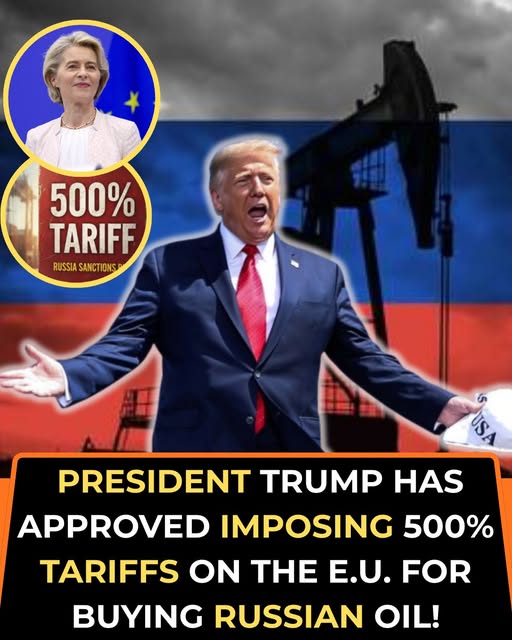
The decision, confirmed by senior administration officials on January 31, 2026, utilizes authority granted under the “Sanctioning Russia Act of 2025″—a law Trump signed into effect earlier in January. The legislation empowers the President to apply punitive tariffs of up to 500% on any nation or bloc determined to be effectively funding Russia’s war effort through energy imports or related transactions.
While the European Union has officially banned direct imports of Russian crude oil and natural gas—with the final gas import ban taking effect just days before the tariff announcement—the Trump administration has repeatedly criticized EU member states for exploiting “loopholes.” Officials point to continued purchases of refined Russian petroleum products routed through third-party countries such as India, Turkey, and the United Arab Emirates. These indirect flows, they argue, still generate revenue for Moscow and undermine the West’s sanctions regime.
European Commission President Ursula von der Leyen now confronts the immediate threat of a full-scale trade war that could devastate the Eurozone economy. A 500% tariff would effectively block the vast majority of European goods from entering the U.S. market, targeting key export sectors including automobiles, pharmaceuticals, machinery, chemicals, and luxury products. The European Commission has called the move “disproportionate and economically self-destructive” and vowed to respond with countermeasures “to protect European citizens and businesses.”
The decision marks one of the most dramatic escalations in trans-Atlantic relations since Trump returned to office. It follows closely on the heels of earlier disputes over Greenland, NATO funding obligations, and differing approaches to Russia and energy security. European leaders had already expressed alarm over the direction of U.S. trade policy, with several capitals privately warning that the tariffs could fracture the Western alliance at a time of heightened global instability.
Administration officials defended the move as necessary to close sanctions loopholes and force full compliance from allies. They argue that any continued economic support for Russia—direct or indirect—prolongs the war in Ukraine and threatens U.S. national security interests. President Trump has previously stated that nations must choose between trading with Russia or maintaining unrestricted access to the U.S. market.
Financial markets reacted sharply to the news, with European stock indices falling and the euro weakening against the dollar. Analysts warn that a prolonged trans-Atlantic trade conflict could push the Eurozone toward recession, disrupt global supply chains, and accelerate efforts by both the EU and other powers to reduce reliance on the U.S. market.
The European Commission is expected to convene an emergency meeting to coordinate a response, which could include retaliatory tariffs on U.S. goods, legal challenges at the World Trade Organization, or accelerated diversification of trade partnerships. The coming days will likely determine whether diplomacy can prevent a full-scale economic rupture between the two largest Western economic blocs.
References
The White House – Statement on 500% Tariffs on EU for Russian Energy Purchases (January 31, 2026)
European Commission – President von der Leyen Response to U.S. Tariff Announcement (January 31, 2026)
Reuters – Trump imposes 500% tariffs on EU over alleged Russian oil loopholes (January 31, 2026)
Financial Times – Transatlantic trade war escalates as U.S. hits EU with 500% tariffs (January 31, 2026)
Bloomberg – Markets plunge on fears of U.S.-EU trade rupture (January 31, 2026)
Politico Europe – EU prepares countermeasures after Trump’s “maximum pressure” tariff move (January 31, 2026)
President Donald Trump has reportedly approved a shocking measure to impose 500% tariffs on the European Union, accusing the bloc of continuing to purchase Russian oil despite sanctions.