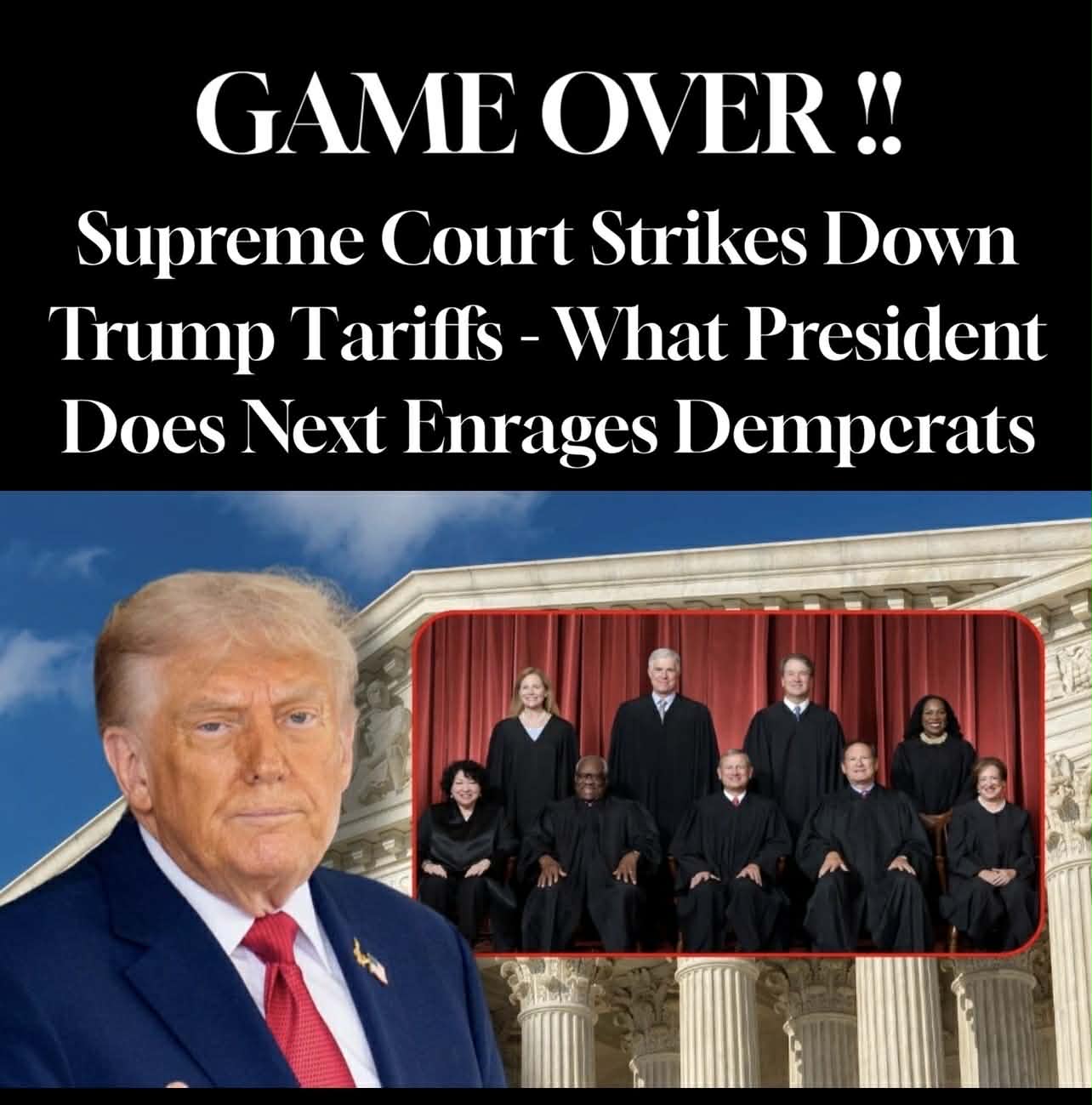
President Donald Trump said Friday he was disappointed by the Supreme Court’s decision striking down a major portion of his tariff plan, calling the ruling a setback for his efforts to reshape U.S. trade policy.
Despite the decision, Trump said his administration will move forward by invoking Section 122 of the Trade Act of 1974 to implement a 10 percent global baseline tariff. According to reports, the president said the action would allow the United States to continue collecting revenue while pursuing broader trade reforms.
Section 122 permits a president to impose temporary tariffs for up to 150 days to address trade deficits, unless Congress votes to extend the measure.
The Supreme Court ruled 6-3 that Trump exceeded his authority by using the International Emergency Economic Powers Act (IEEPA) to impose sweeping tariffs on multiple countries. The majority determined that the statute does not grant the president the power to enact broad-based tariffs in this manner.
During a White House press briefing, Trump expressed strong disagreement with the ruling and praised Justices Samuel Alito, Clarence Thomas, and Brett Kavanaugh for dissenting. He also criticized the majority’s interpretation of the law, arguing it limits executive flexibility in responding to trade concerns.
2/2 Trump Announces New Global Tariff After Supreme Court Ruling
The tariffs challenged in court ranged from 10 percent to 50 percent and were imposed last year on goods from various countries. Small businesses and several states filed lawsuits contending that the administration had improperly relied on IEEPA authority. The Supreme Court ultimately agreed with those challengers.
Trump said the administration is reviewing other statutory authorities to continue advancing its trade agenda, including measures tied to national security and trade imbalances.
In a dissenting opinion, Justice Clarence Thomas argued that both the Constitution and federal law grant Congress the authority to regulate importation and that this power historically has included the ability to impose duties. He maintained that the statute relied upon by the administration authorized the tariffs in question.
The ruling represents a significant legal setback for a central component of Trump’s economic strategy. Administration officials have indicated they will continue exploring alternative legal pathways to implement trade policies consistent with the president’s objectives.